
INVT GD20-09-011G-4-B lifting dedicated frequency converter
Date: 2026年7月2日 Categories: News Views: 79
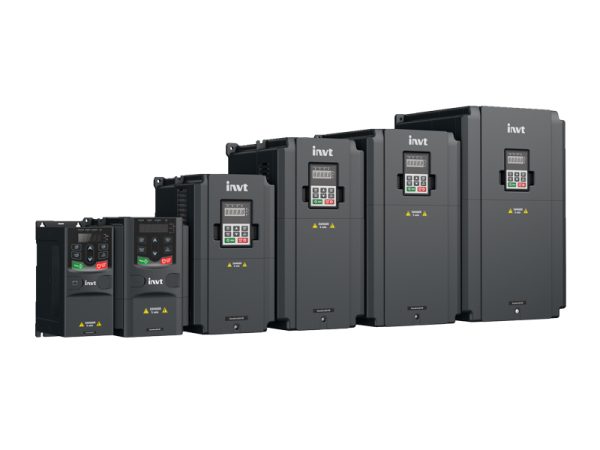
INVT GD20-09 series crane frequency converter: key issues for installation and commissioning
Installation environment and wiring specifications
GD20-09, also known as Goodrive20-09, is a crane specific frequency converter from INVT. Its installation must comply with industrial electrical specifications. The equipment should be installed in a well ventilated electrical control cabinet, with sufficient heat dissipation space reserved to avoid heat sources and strong electromagnetic interference sources. The power line and control line need to be wired separately, and shielded and grounded to avoid signal interference affecting the stable operation of the frequency converter.
Self learning operation of motor parameters
The core step of power on debugging for Goodrive20-09 crane dedicated frequency converter is self-learning of motor parameters. Before debugging, it is necessary to confirm the power matching between the motor and the frequency converter, disconnect the load to complete parameter identification, and ensure that the frequency converter accurately grasps the motor characteristics. The INVT series supports both static and dynamic self-learning modes, which can be selected according to the on-site equipment situation to ensure subsequent control accuracy.
Crane specific parameter configuration
When debugging the GD20-09 crane specific frequency converter, special parameters need to be configured based on the characteristics of the lifting mechanism. Including the increase of starting torque, timing of braking logic, overload protection threshold, etc., it is necessary to match the actual lifting tonnage and mechanism type. The lifting mechanism should focus on setting anti slip hook parameters and torque thresholds, while the walking mechanism should focus on smooth acceleration and deceleration parameters to ensure operational adaptability.
Step by step debugging from no load to heavy load
The on-site debugging of INVT Goodrive20-09 should follow the step-by-step principle from no load to heavy load. Complete the no-load trial run first to verify the stability of forward and reverse rotation, start stop, acceleration and deceleration; Gradually load the test again to verify the reliability of heavy-duty starting, torque output, and braking coordination. Monitor the operating current and temperature parameters throughout the process, and confirm that there are no abnormalities before starting formal operations.